

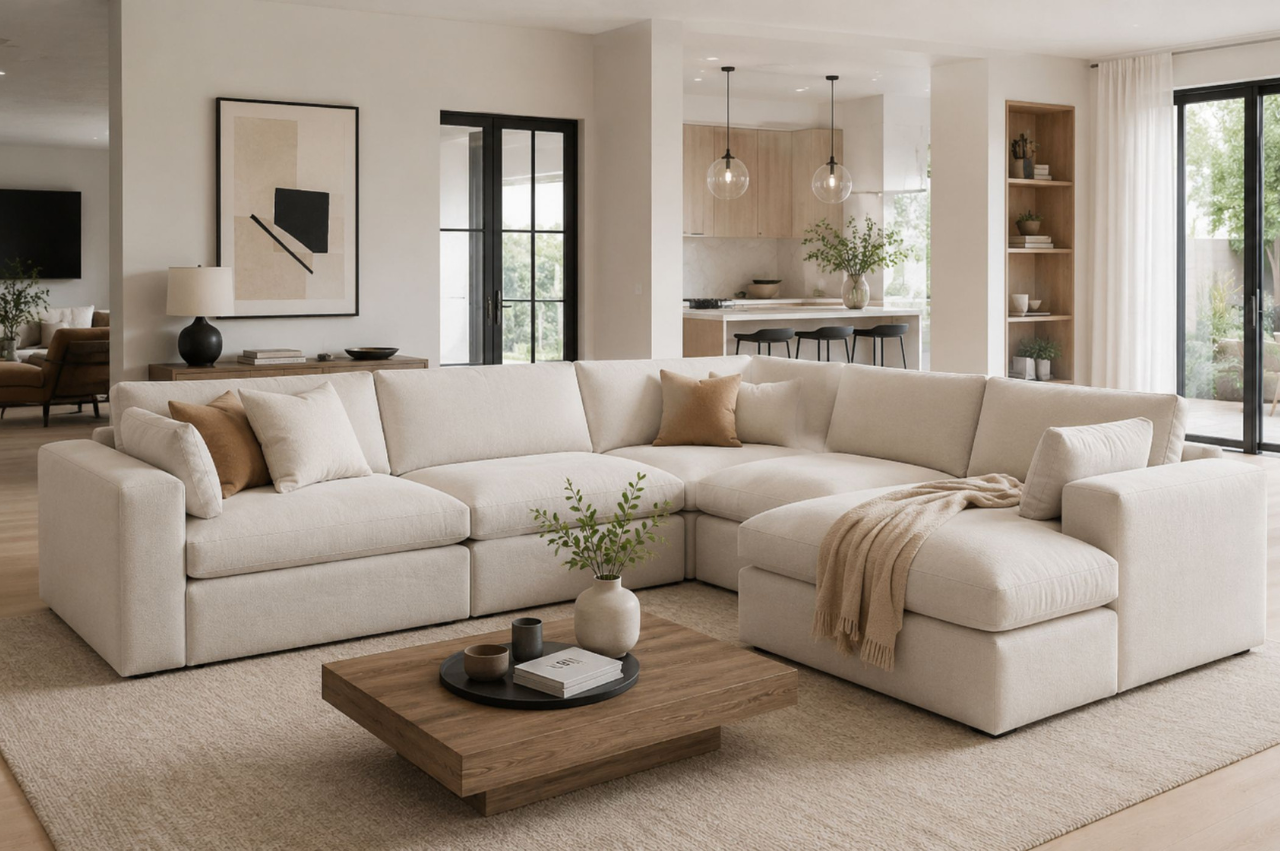
A large sectional sofa is one of the few furniture decisions that changes the entire logic of a living room. It does not just fill space. It defines zones, sets the tone and becomes the focal point of the space. When it is chosen well and placed with intention, a sectional makes a living room feel like it was designed rather than furnished. This guide covers how to get there from every angle, layout, proportion, open plan living, small spaces and the finishing details that separate a good room from a genuinely considered one.
Which Sectional Sofa Suits YOUR Floor Plan?
Before you think about fabric or configuration, think about the floor.
Every strong sectional living room idea starts with a clear understanding of the floor plan. Where are the doorways? Where is the focal point, whether that is a fireplace, a media wall or a window? The sectional should face that focal point and anchor the seating zone without blocking any path through the room.
The most common mistake in living room ideas with sectional sofa layouts is pushing the sectional flush against two walls. This makes the room feel smaller rather than larger because it eliminates the visual breathing room between the furniture and the wall. Pulling the sectional even 6 to 12 inches away from the wall on each side gives the room a more finished, considered quality that is immediately noticeable.
Can a Sectional Work in a Small Living Room?
Many homeowners assume a sectional is too large for a small living room.
A sectional in a small living room sounds counterintuitive but often works better than a sofa and two chairs because it consolidates the seating footprint. Instead of three or four separate pieces floating around the room, sectionals create one defined zone that keeps the remaining floor space clear and navigable.
The key is choosing a sectional that is scaled for the room. A low-profile sectional under 33 inches tall keeps the sightlines open and makes the ceiling feel higher. A neutral upholstery in a warm cream or light grey visually recedes and avoids closing the room in. The Romi Sofa Sleeper Sectional is a strong option here. At 96 inches wide with an integrated storage chaise, adjustable headrest and pull-out sleeper, it gives a compact living room full functionality in a single well-proportioned piece without overwhelming the floor plan.
How the Colour of Your Sectional Can Change the Mood of Your Room?
The upholstery colour of a sectional does not just affect how the piece looks in isolation. It changes the perceived scale and atmosphere of the entire room around it. A large sectional in a warm cream or oatmeal tone makes a living room feel more expansive and airy.
The same room with the same layout but a sectional in a deep olive, charcoal or terracotta reads as more intimate and more curated. Neither is wrong, but they can make the room look quite distinct.
This matters especially in luxury living room design where the goal is a specific feeling, not just functional seating. Decide on the atmosphere first. Then choose the tone.
Different Ways to Arrange a Sectional Couch for a Luxury Result
An L-shaped configuration placed in a corner maximises seating while keeping the centre of the room clear for a coffee table and unobstructed walkways. This is the most versatile arrangement and works well in both square and rectangular living rooms because it creates a defined seating area without overwhelming the space.
A U-shaped configuration wraps around a central focal point and is particularly effective in larger living rooms. By surrounding a fireplace, media wall or coffee table, it creates a more intimate conversation zone and makes the room feel cohesive despite its size.
Floating the sectional away from the wall can elevate either configuration. Leaving some breathing room around the furniture creates a more deliberate layout, while a large area rug placed underneath helps anchor the seating zone and contributes to the grounded, considered look often associated with luxury interiors.
Styling a Sectional in an Open Concept Living Room
Open concept living room with sectional layouts present a specific challenge. Without walls to define the space, the sectional itself has to do that work.
The most effective approach is using the back of the sectional as a room divider. Positioning the sectional so the back faces the kitchen or dining area creates a visual boundary between zones without any physical barrier. This is particularly effective in Canadian open-plan homes where the living and dining areas share a single floor plate. A long console table placed behind the sectional reinforces the boundary and adds a surface for lamps and objects that face the dining side of the room.
How to Style a Sectional Sofa for a Complete Luxury Look?
How to style a sectional sofa comes down to the layers around it.
A large area rug that extends beyond the front legs of the sectional on all sides defines the zone and makes the sectional feel intentional rather than placed.
A low round or oval coffee table in the centre keeps the sightlines open. One accent chair placed at a slight angle to the chaise end of the sectional creates a second focal point and a more dynamic seating arrangement.
For cushions, odd numbers work better than even. Three or five cushions in complementary tones across the sectional adds visual interest without looking like a matching set. The Alonso Media Sleeper Sectional with its button-tufted accents, built-in USB port and cup holders already brings a finished, luxury-leaning quality to a living room that makes the styling process easier from the start.
Find Your Sectional at Accents@Home
A luxury living room built around a large sectional is not about the size of the piece. It is about how deliberately every decision around it was made, from the floor plan to the colour to the objects placed on the coffee table in front of it. Browse the full sectionals collection and sofas range at Accents@Home to find a sectional that complements your layout, lifestyle and design vision.


